

OCD Therapy For Children & Teens
When OCD starts taking over your child’s life. Long Beach, CA & Online
YOU ARE NOT ALONE
When OCD takes up more and more space.
What may begin as fears, rituals, reassurance seeking, or avoidance can gradually take up more and more space in daily life.
You may find yourself changing routines, answering the same questions repeatedly, accommodating rituals, or trying to prevent situations that trigger your child’s anxiety.
How it can begin
What parents may notice themselves doing

DIFFERENT THEMES, SAME OCD CYCLE
OCD can latch onto almost anything.
OCD can latch onto almost anything that matters to your child or teen, creating persistent fear, doubt, guilt, or a need for certainty. Common themes include:
Contamination OCD
Fears about germs, illness, getting sick, or contamination
Harm OCD
Fears of accidentally or intentionally hurting themselves or someone else
Health OCD
Ongoing worries about illness, health, or body sensations
Responsibility OCD
Fears of causing harm or being responsible for preventing something bad
Magical Thinking OCD
Fears that thoughts, words, numbers, colors, or rituals can cause or prevent bad things
Just-Right OCD
A need for things to feel even, symmetrical, complete, or “just right”
Perfectionism & Mistakes
Fears of making mistakes, not doing things perfectly, or disappointing others
Scrupulosity
Excessive worries about morality, honesty, religion, or being a good person
Emotional Contamination OCD
Fears that certain people, places, or experiences can transfer unwanted feelings or qualities
False Memory OCD
Persistent doubt about whether something happened or whether they can trust their memory
Real Event OCD
Excessive doubt, guilt, or distress about something that actually happened in the past
This is not a comprehensive list. Some children spend much of their time caught in mental compulsions, while others engage in more visible compulsions.
Mental compulsions
Visible compulsions
Whatever the theme, treatment focuses on helping your child respond differently to OCD rather than getting pulled into its cycle.
TREATMENT THAT HELPS
OCD is highly treatable.
With evidence-based treatment, children and teens can learn to face fears, tolerate uncertainty, and respond differently to intrusive thoughts and uncomfortable feelings.
Through Exposure and Response Prevention (ERP) and other evidence-based approaches, children gradually practice facing what they fear while resisting compulsions and avoidance. With repeated practice, OCD can become less powerful, confidence can grow, and your child’s world can begin to open up again.
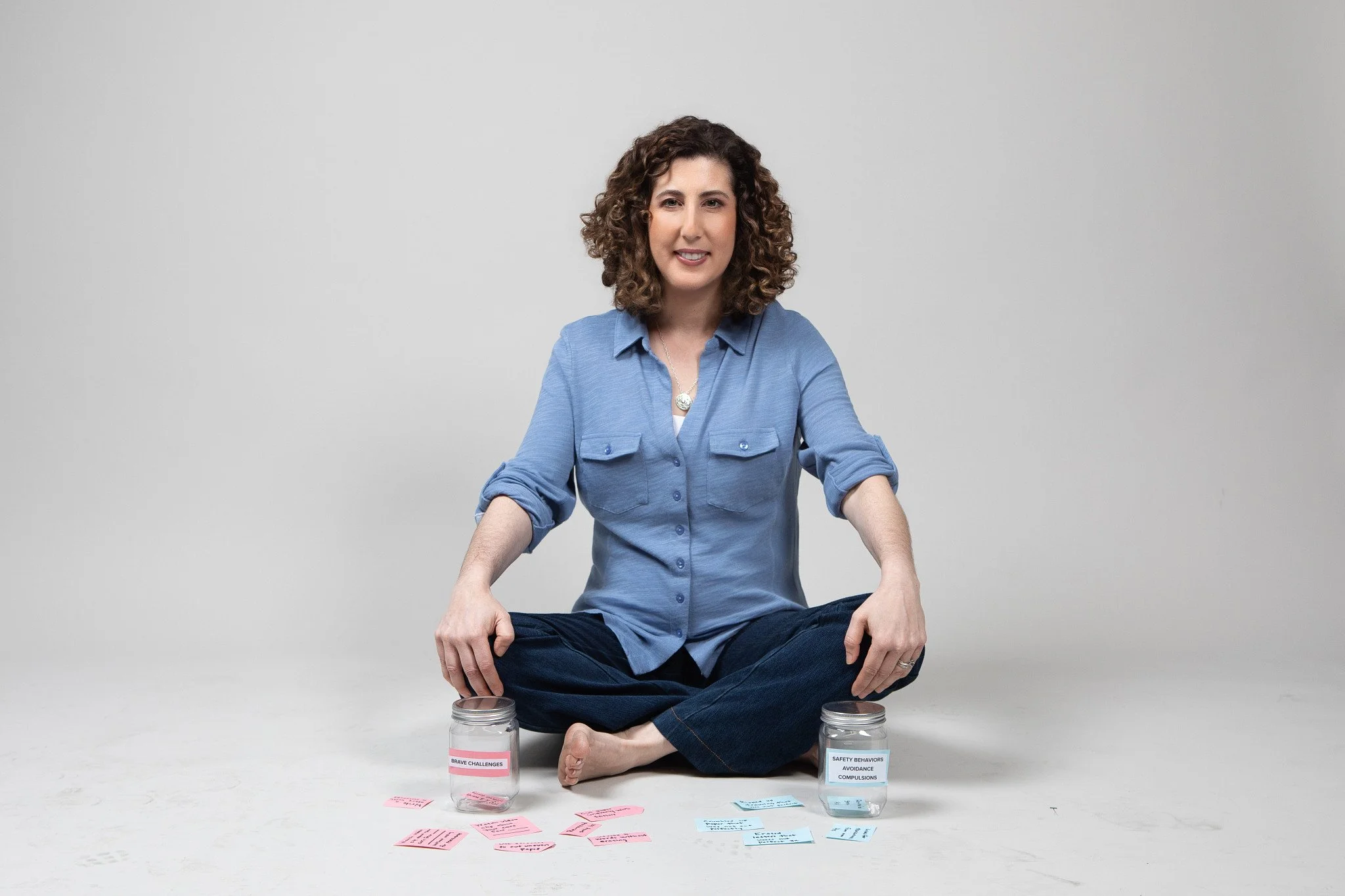
My Approach
How I help children & teens with OCD.
I provide specialized treatment for children and teens with OCD, using Exposure and Response Prevention (ERP), the gold-standard behavioral treatment for OCD, along with Acceptance and Commitment Therapy (ACT), family-based interventions, and other evidence-based approaches as appropriate.
My approach is grounded in the Transformative Path, helping children understand what is keeping them stuck, build new ways of responding, and move toward a life that is less controlled by OCD.
I have successfully helped many children and teens reduce the impact of OCD, build confidence in their ability to handle uncertainty, and get back to the people, activities, and experiences that matter to them.
Understand the OCD Cycle
We’ll begin with a thorough assessment to understand how OCD is showing up for your child, identify their specific needs and goals, and develop an individualized treatment plan. I’ll also explain how OCD works and help your child recognize the cycle of obsessions, compulsions, avoidance, reassurance seeking, and family accommodation that can keep OCD going.
Understanding what OCD is doing and why it feels so convincing, can help your child begin to step out of the cycle and approach treatment with greater confidence.
Learn to Respond Differently
Through ERP, ACT, and other evidence-based approaches, your child will gradually practice facing fears, tolerating uncertainty, and resisting compulsions and avoidance. Treatment is tailored to their developmental level, personality, interests, and goals, using practical, engaging, and creative approaches. Modifications are made as needed for neurodivergent children and teens.
Build a Life Beyond OCD
Therapy isn’t just about reducing symptoms. Children and teens practice using these skills at home, at school, with friends, and in everyday life building confidence and making more room for the things that matter to them.
FAMILY SUPPORT
Parents are part of the team.
Parents play an important role in helping children and teens make progress.
Together, we’ll identify patterns that may unintentionally keep OCD going and develop practical strategies to support your child’s treatment at home.

You won’t have to guess whether you’re helping or accommodating OCD. Together, we’ll create a consistent plan that supports your child’s progress.
When your child isn’t ready for therapy
Not every child is ready to engage in therapy right away.
If your child refuses therapy or hasn’t made progress in the past, SPACE therapy may be a helpful option. It focuses on parent strategies that can reduce OCD’s hold, even when your
ELEMENTARY · MIDDLE · HIGH SCHOOL
A more flexible & connected life.
Whether your child is in elementary school, middle school, or high school, the goal is to help OCD take up less space in their life.
That means more time for friends, school, activities, family, and the ordinary moments of childhood and adolescence and less time controlled by fear, rituals, avoidance, and reassurance.
As OCD becomes less controlling, children and teens can develop greater confidence in their ability to handle uncertainty and face challenges.
More time for
Less time controlled by
“You don’t have to keep fighting OCD on its terms.”

NEXT STEPS
The goal is meaningful symptom relief and a life that feels bigger than OCD.
With specialized OCD treatment and family support, your child can learn that OCD doesn’t have to call all the shots. Together, we can help them reclaim their time, confidence, and choices.
TAKE THE FIRST STEP
If OCD is getting in the way of your child’s life, you don’t have to figure it out alone. Let’s talk about what’s happening and whether specialized OCD therapy could be a good fit for your child.

Commonly Asked Questions
FAQ’s
How do I know if my child has OCD or if it's just common fears or rituals?
Many children experience fears, routines, or habits as a normal part of development. OCD may be a concern when worries or rituals feel difficult to control, cause significant distress, take up a lot of time, or interfere with school, friendships, or family life. Some children also experience mental rituals or feel driven to do things a certain way to feel safe or make something feel “just right.” A thorough assessment can help determine whether these experiences may be related to OCD or typical childhood worries and behaviors.
Do you treat OCD when my child's symptoms might be due to PANS or PANDAS?
Yes. I treat OCD when symptoms occur due to suspected or diagnosed PANS/PANDAS. These conditions can involve the sudden onset of OCD symptoms, often alongside other changes. I recommend a medical evaluation with a clinician experienced in PANS/PANDAS to assess your child’s symptoms and determine whether medical testing and/or medical treatment is indicated. I can provide referrals and collaborate with your child’s medical team.
Treatment with me takes into account the emotional and physical impact of these symptoms on your child and family. I provide support for the distress these changes can bring while helping your child learn to respond differently to OCD through ERP (Exposure and Response Prevention), when appropriate. Treatment is tailored to your child’s needs and coordinated with their medical care.
How long does OCD treatment take for children and teens?
Treatment varies from child to child, but many begin to see meaningful improvement within a few months of weekly sessions. A typical course of ERP with ACT-informed strategies may involve 12–25 sessions, though children with more severe or complex OCD may need additional support. Some children make significant progress in less than 12 weeks, while others benefit from a longer course of treatment. Progress also depends on practicing skills between sessions and how OCD is addressed at home, which is why parent involvement is an important part of treatment. We’ll check in regularly to review progress and adjust the approach as needed.